
 Bitcoin
  Ethereum
  Tether
  BNB
BNB  USDC
USDC  XRP
XRP  Solana
  TRON
TRON  Lido Staked Ether
  Figure Heloc
  Hyperliquid
  Dogecoin
  USDS
USDS  Rain
Rain  LEO Token
  Wrapped stETH
  Zcash
Zcash  WhiteBIT Coin
  Wrapped Bitcoin
  Cardano
  Binance Bridged USDT (BNB Smart Chain)
  Stellar
  Wrapped Beacon ETH
  Monero
  Chainlink
  Canton
  Wrapped eETH
  Bitcoin Cash
  Dai
Dai  sUSDS
sUSDS  USD1
USD1  Ethena USDe
  Gram (prev. Toncoin)
  Coinbase Wrapped BTC
  Litecoin
  Global Dollar
  Circle USYC
  WETH
WETH  Hedera
  Sui
Sui  PayPal USD
  USDT0
USDT0  Avalanche
  Cronos
  Tether Gold
  Shiba Inu
  NEAR Protocol
  BlackRock USD Institutional Digital Liquidity Fund
  Ondo US Dollar Yield
  Ethena Staked USDe
  Uniswap
  Bittensor
  World Liberty Financial
  PAX Gold
  MemeCore
  Aster
Aster  HTX DAO
  OKB
OKB  Ripple USD
  Ondo
Ondo  Little Pepe
  USDD
USDD  syrupUSDC
  Falcon USD
  Polkadot
  Morpho
  Mantle
  DeXe
DeXe  Aave
Aave  BFUSD
BFUSD  Worldcoin
  Sky
Sky  Internet Computer
  Bitget Token
  Pi Network
  Ethereum Classic
  Pepe
Pepe  United Stables
  Jupiter Perpetuals Liquidity Provider Token
  Spiko EU T-Bills Money Market Fund
  Blockchain Capital
  Quant
Quant  KuCoin
  Janus Henderson Anemoy Treasury Fund
  Jito Staked SOL
  USDGO
USDGO  Stable
  Kelp DAO Restaked ETH
  Invesco Short Duration US Government Securities Fund
  JUST
JUST  Binance-Peg WETH
  POL (ex-MATIC)
  Rocket Pool ETH
  Cosmos Hub
  Kaspa
Kaspa  Binance Bridged USDC (BNB Smart Chain)
  Render
  Algorand
  Wrapped BNB
  ADI
ADI  Function FBTC
  Beldex
  USDtb
USDtb  NEXO
NEXO  Jupiter
  LAB
LAB  syrupUSDT
  Spiko Amundi Overnight Swap Fund (EUR)
  币安人生 (BinanceLife)
  Gate
Gate  Binance Staked SOL
  Ethena
  Audiera
  Janus Henderson Anemoy AAA CLO Fund
  Filecoin
  GHO
GHO  Pump.fun
  NEW X CEO IS BACK
  Polygon Bridged USDC (Polygon PoS)
  Lighter
  Solv Protocol BTC
  Flare
Flare  Lombard Staked BTC
  Usual USD
  XDC Network
  YLDS
YLDS  clBTC
clBTC  Midnight
  Provenance Blockchain
  USX
USX  Aptos
Aptos  Aerodrome Finance
  Venice Token
  StakeWise Staked ETH
  TrueUSD
  Arbitrum
  Kinetiq Staked HYPE
  A7A5
A7A5  tBTC
tBTC  Injective
  PancakeSwap
  Dash
Dash  EURC
EURC  VeChain
  Ondo Short-Term U.S. Government Bond Fund
  Pudgy Penguins
  c8ntinuum
  Hastra PRIME
  Mantle Staked Ether
  Official Trump
  Celestia
  Polygon PoS Bridged DAI (Polygon POS)
  Ether.fi
  Resolv wstUSR
  Artificial Superintelligence Alliance
  COCA
COCA  Sun Token
  Bonk
Bonk  SPX6900
  Doge Strategy
  Liquid Staked ETH
  First Digital USD
  Arbitrum Bridged WBTC (Arbitrum One)
  LayerZero
  Virtuals Protocol
  Pyth Network
  The9bit
  Terra Luna Classic
  Wrapped Flare
  Kinesis Gold
  Sei
Sei  L2 Standard Bridged WETH (Base)
  apxUSD
  Steakhouse USDC Morpho Vault
  Curve DAO
  Stacks
  Jito
Jito  Monad
Monad  Kite
Kite  Binance-Peg XRP
  Gnosis
  Ether.Fi Liquid ETH
  Tezos
Tezos  Renzo Restaked ETH
  Lido DAO
  MegaUSD
  Noon
Noon  Royal Dollar
  sBTC
sBTC  AINFT
AINFT  BitTorrent
  Bitcoin SV
  Jupiter Staked SOL
  Pendle
  Savings USDD
  Olympus
  DoubleZero
  Plasma
  Marinade Staked SOL
  Legacy Frax Dollar
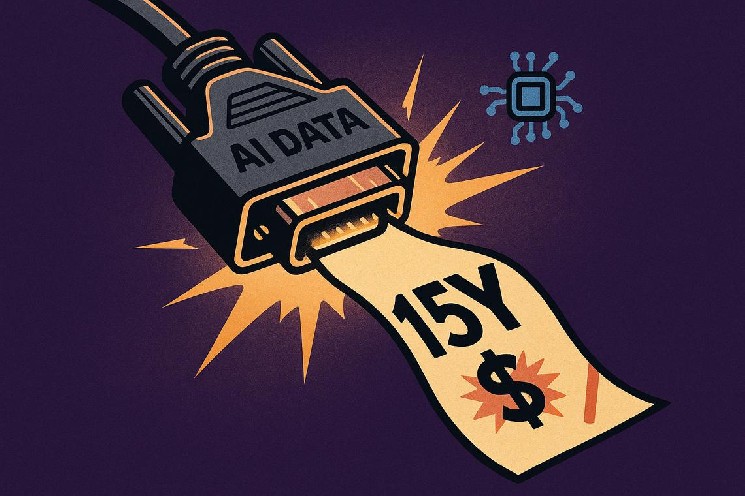
Something unusual happened in the Bitcoin mining sector this summer: companies built to process cryptocurrency transactions started signing some of the largest AI infrastructure contracts in the industry. The wave of Bitcoin mining AI deals recorded through July has quietly redrawn the investment map for a sector many had written off as a one-trick play on crypto prices.
Key takeaways
- Bernstein’s deal tracker recorded more than 7.5 gigawatts of AI-related Bitcoin mining contracts by July, equivalent to $150 billion in multi-year commitments.
- Hut 8 signed a 15-year, $9.8 billion lease for its AI data center campus; IREN disclosed $2.8 billion in cloud services contracts with AI developers.
- TeraWulf’s 20-year lease with Anthropic could generate roughly $19 billion in contract revenue; MARA Holdings is acquiring a Texas site with up to 2 gigawatts of capacity.
- Bernstein rates most Bitcoin mining stocks as outperform, with MARA as the exception at market perform.
- Political resistance to new AI data centers — from Texas to Oregon to the federal level — is making existing Bitcoin miner infrastructure harder to replace.
Bitcoin mining companies secure multi-gigawatt AI infrastructure deals
The numbers are hard to ignore. According to a research note from Bernstein shared with Cointelegraph, the firm’s Bitcoin mining industry deal tracker logged a new AI-related agreement every single week in July. By the end of the month, combined deal volume had surpassed 7.5 gigawatts, representing the contracted equivalent of $150 billion in multi-year contracts. That pace — one deal per week — suggests this is not a trend; it’s a structural shift.
Major deals announced by Hut 8, IREN, MARA, and TeraWulf
The headline transaction came from Hut 8, which signed a 15-year, $9.8 billion lease for its AI data center campus. CEO Asher Genoot told CNBC the lease was proof that the company’s pivot from Bitcoin mining to AI infrastructure is paying off.
IREN moved in parallel, disclosing $2.8 billion in cloud services contracts with AI developers. Seeking Alpha contributor The Curious Analyst framed the development plainly: “IREN is beginning to convert that infrastructure advantage into contracted and more predictable revenue. The biggest risk to my thesis is execution.” That word — execution — will matter more than any headline figure as these deals move from announcement to cash flow.
TeraWulf went further still, signing a 20-year data center lease with AI startup Anthropic. The company said the deal could generate roughly $19 billion in contract revenue over its duration. MARA Holdings, meanwhile, announced plans to acquire a Texas site with up to 2 gigawatts of capacity for AI and digital infrastructure expansion. Bitdeer has also pushed into AI cloud services and high-performance computing, rounding out a sector-wide repositioning that would have seemed implausible just two years ago.
Scale and value of AI-related Bitcoin mining contracts
To put the aggregate numbers in context: $150 billion in contracted multi-year commitments is not speculative pipeline — it represents binding or near-binding commercial arrangements between Bitcoin miners and some of the most heavily capitalized players in AI. The speed of deal accumulation, one per week in July alone, points to genuine urgency on the AI side rather than opportunistic dealmaking by miners looking for a new narrative.
The market responded accordingly. Bitcoin mining stocks logged double-digit gains on the Monday following the Hut 8 and IREN announcements. Ahead of the Nasdaq open on Thursday, HUT 8 shares were up 5.23%, IREN up 1.89%, and TeraWulf up 1.49%. The sector-tracking CoinShares Bitcoin Mining ETF (WGMI) rose 1.47% in premarket trading.
Bernstein’s positive outlook on Bitcoin mining amid AI power constraints
Bernstein remains bullish on the Bitcoin mining sector, and its reasoning goes beyond deal volume. The firm’s core thesis is that access to power is the AI industry’s real bottleneck — and that Bitcoin miners, who have spent years acquiring and operating large-scale energy infrastructure in locations that utilities already serve, are uniquely positioned to fill that gap.
Importance of third-party computing capacity for AI companies
The structural argument is straightforward. AI developers need gigawatts of reliable power, and they need it faster than permitting timelines for brand-new data centers allow. Bitcoin miners already have the sites, the grid connections, and in many cases the cooling and power delivery equipment. Third-party computing capacity from these operators will remain highly valuable precisely because building from scratch is becoming politically and logistically harder — not easier.
Bullish sector rating and stock performance
Bernstein has assigned an outperform rating to all the Bitcoin mining stocks it named in its research note — with one exception. MARA Holdings carries a market perform rating, a signal that the firm sees the others as having more near-term upside relative to risk. The distinction matters for investors tracking which names Bernstein views as the clearest beneficiaries of the AI power crunch thesis.
Political and regulatory challenges for AI data center expansion in the US
The political environment surrounding new AI data center construction is becoming measurably more complicated — and that complexity is, paradoxically, one of the strongest arguments for the Bitcoin mining AI deals thesis. If building new facilities gets harder, existing infrastructure gets more valuable.
Local approval and tax proposals in Texas
Texas Democratic Senate candidate James Talarico reportedly shared a proposal that would create stronger local approval processes for AI data centers and repeal existing tax breaks for the sector. The proposal signals that even in a state known for pro-business energy policy, the political consensus around data center expansion is no longer unconditional.
Environmental concerns over water use in Oregon
US Senator Ron Wyden raised a different kind of concern in April, warning that AI data centers in Oregon could worsen water scarcity during persistent droughts. Wyden noted that large data centers can consume up to 5 million gallons of water per day and asked major operators to explain how they planned to reduce groundwater withdrawals. The intervention illustrates that electricity consumption is not the only resource constraint drawing scrutiny.
Federal initiatives on electricity costs and cost allocation
At the federal level, the Trump administration published a Ratepayer Protection Pledge in March, committing to expand AI infrastructure without increasing electricity bills for households and small businesses. In January, several state governors published grid expansion plans but insisted that new data centers should bear the costs they create rather than passing them to existing residential customers.
Execution risk remains the central question
The announced contract values — $9.8 billion, $19 billion, $2.8 billion — are striking. But contracted revenue and realized revenue are not the same thing, and the gap between them is where analyst skepticism concentrates. The Curious Analyst noted that execution risk is significant as these deals move from announcement to cash flow.
That timeline matters. Bitcoin mining companies are betting that their infrastructure advantage translates into durable, predictable cash flows before the capital markets lose patience. The deals are real, the counterparties are credible, and the power constraints driving AI demand are not going away. But between a signed lease and a profitable quarter lies everything that could go wrong — permitting delays, construction overruns, counterparty renegotiations, and the ever-present possibility that the AI investment cycle cools before the miners fully monetize their position.
Bernstein’s outperform ratings reflect confidence that the sector gets there. Whether the individual companies do — and in what order — is the question that will define which of these stocks actually delivers on the promise of the Bitcoin mining AI infrastructure moment.
FAQ
Why are Bitcoin mining companies involved in AI data center infrastructure?
Bitcoin mining companies provide third-party computing capacity and large-scale energy infrastructure that helps address the power constraints faced by AI data centers. Because they already hold grid connections, sites, and power delivery equipment, they can offer capacity faster than building new facilities from scratch allows.
What regulatory challenges do AI data centers face in the US?
AI data centers face growing political pushback including calls for stronger local approval processes, proposals to repeal tax breaks, concerns over water consumption — US Senator Ron Wyden cited up to 5 million gallons per day in Oregon — and state-level requirements that data centers bear their own infrastructure costs rather than passing them to residential customers.
How has Bernstein rated Bitcoin mining stocks amid AI infrastructure expansions?
Bernstein rates most of the Bitcoin mining stocks it covers as outperform, reflecting confidence in their AI infrastructure positioning. MARA Holdings is the exception, rated market perform by the firm.
What are the risks analysts associate with AI-related Bitcoin mining deals?
The primary risk is execution — converting signed contracts into actual revenue. Regulatory uncertainty, construction timelines, and potential shifts in AI investment cycles could all affect whether announced deal values translate into cash flows.
Article produced with the assistance of artificial intelligence and reviewed by the editorial team.
